Policy Study
Pathways to Euro-Arab Gulf green partnership: how renewable energy-based manufacturing value chains can expand EU-GCC cooperation in green transition and climate diplomacy



Abstract
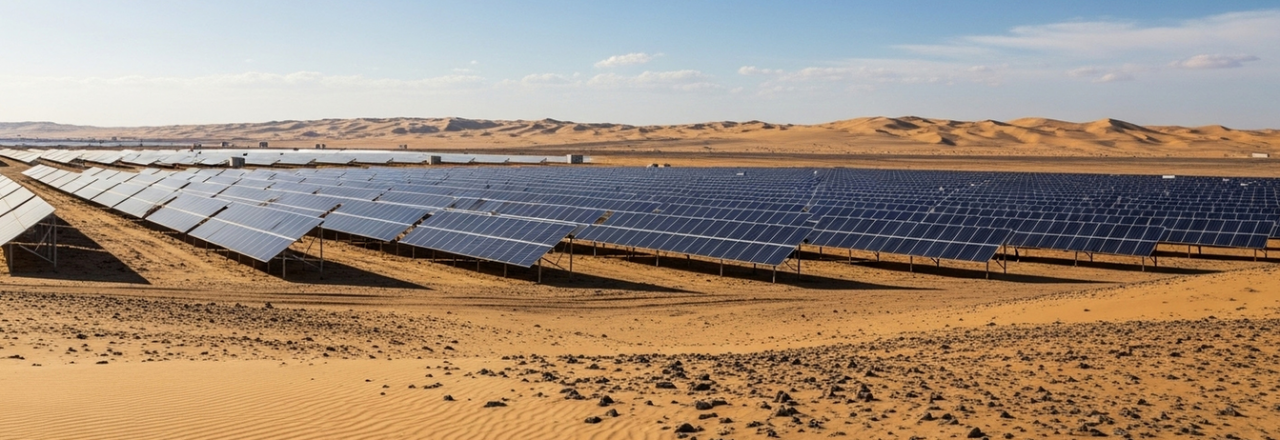
This Joint Policy Study analyses how cooperation between the European Union (EU) and the Arab Gulf states can support energy transition while strengthening industrial competitiveness on both sides. It finds strong convergence between the EU’s clean industrial agenda and the Gulf Cooperation Council (GCC) states’ strategies to diversify their economies through decarbonised industrialisation.
As Europe accelerates its green transition under the Clean Industrial Deal, Gulf countries such as the UAE, Saudi Arabia, Oman, Qatar, Kuwait and Bahrain are investing heavily in renewable energy, low-carbon manufacturing and green value chains. Rather than compliance-driven adaptation alone, these efforts reflect a strategic push to position the Gulf as a global hub for competitive, low-carbon production.
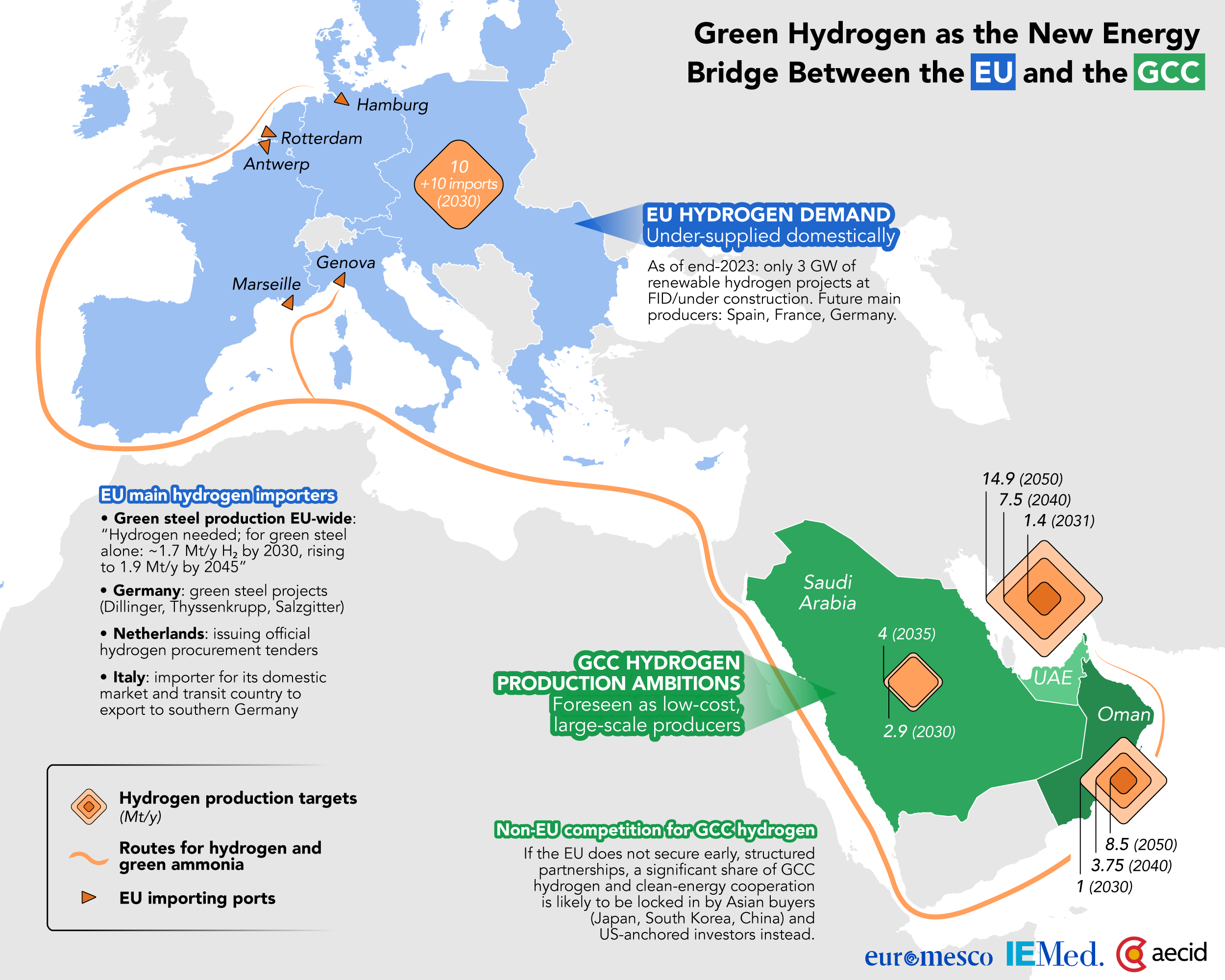
Through sectoral and country-level analysis, the study highlights how emerging green energy ecosystems in the Gulf are creating new opportunities for EU–GCC cooperation. Renewable energy deployment, green hydrogen, metals processing, fertilisers and sustainable fuels stand out as areas where joint ventures, co-investment and shared value chains could enhance supply-chain resilience and market access for both regions.
The study also shows that EU policies such as the Carbon Border Adjustment Mechanism (CBAM) are already incentivising low-carbon production in the Gulf, while opening space for deeper cooperation on certification, regulatory alignment and clean trade instruments. Rather than competing, the EU and GCC can leverage complementary strengths: European technology and standards alongside Gulf capital, scale and implementation capacity.
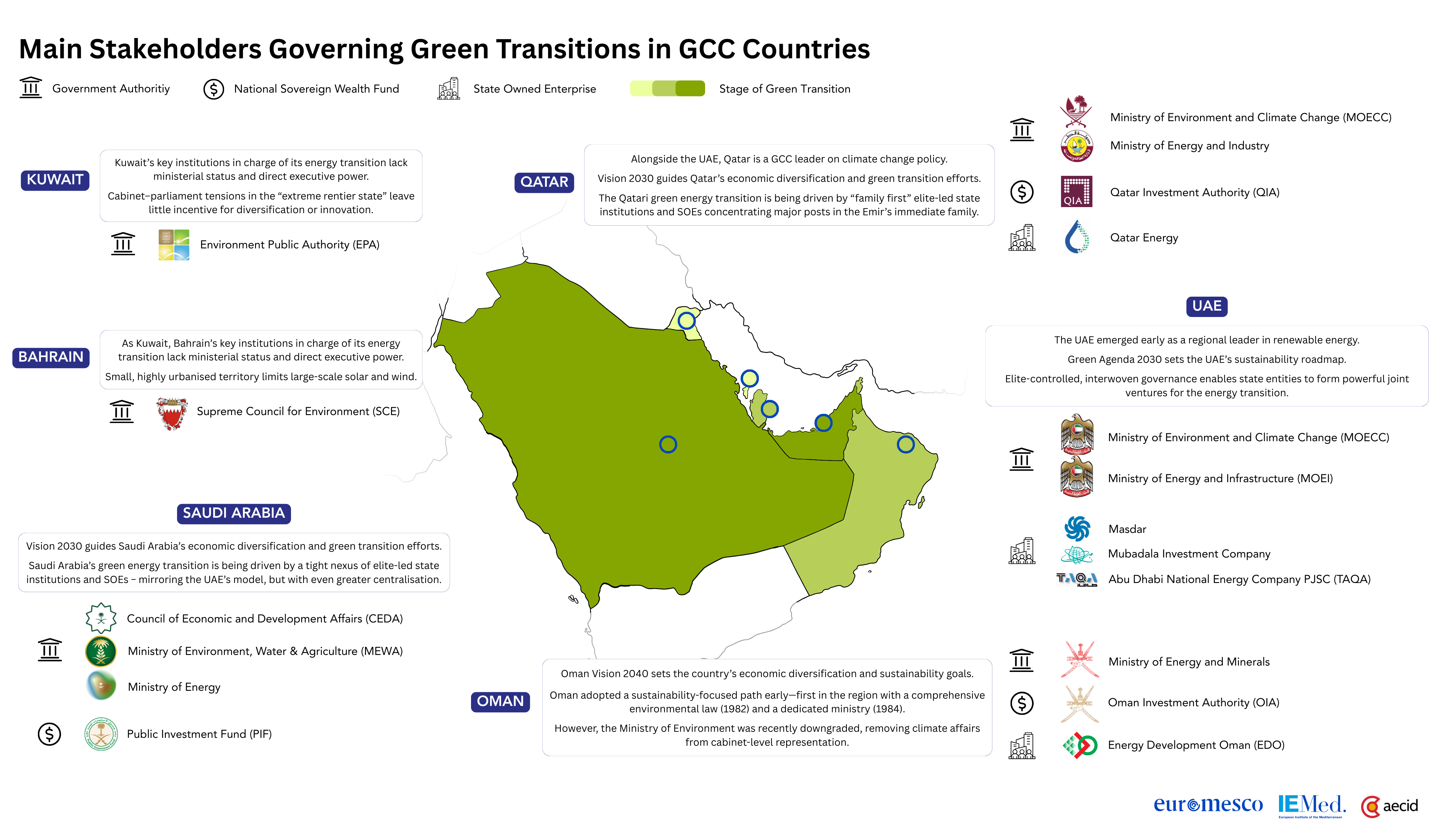
Across its four chapters, the study examines cooperation challenges and opportunities through the lenses of production and value chains, trade and regulatory norms, finance and governance. It finds that while governance models in the Gulf remain centralised and state-led, they offer scope for pragmatic, transactional partnerships when strategic interests align.
The study calls for a shift from ad hoc collaboration toward structured, forward-looking partnerships that embed sustainability, competitiveness and resilience.
It recommends that EU–GCC cooperation should:
- Focus on joint investment in renewable energy-based manufacturing value chains.
- Develop shared certification and carbon accounting frameworks to support clean trade.
- Mobilise blended finance and green financial instruments to de-risk large-scale projects.
- Prioritise early engagement with key public and private actors through joint ventures, offtake agreements and co-financed R&D.
By linking green industrialisation to economic diversification and supply-chain resilience, the study argues that EU–GCC relations can evolve into a strategic partnership capable of shaping the next phase of global clean manufacturing.