
Policy Brief
Open waste data for a circular MENA. Practical transparency for better services, trust, and a just transition

Abstract
This Policy Brief examines how chronic data gaps continue to shape waste management in MENA cities: from opaque contracts and untracked payments to missing service performance indicators, environmental monitoring gaps, and inaccessible complaint systems. While cities invest heavily in waste collection and disposal, the absence of routine, reusable data limits oversight, weakens service quality, and slows progress toward circular economy goals.
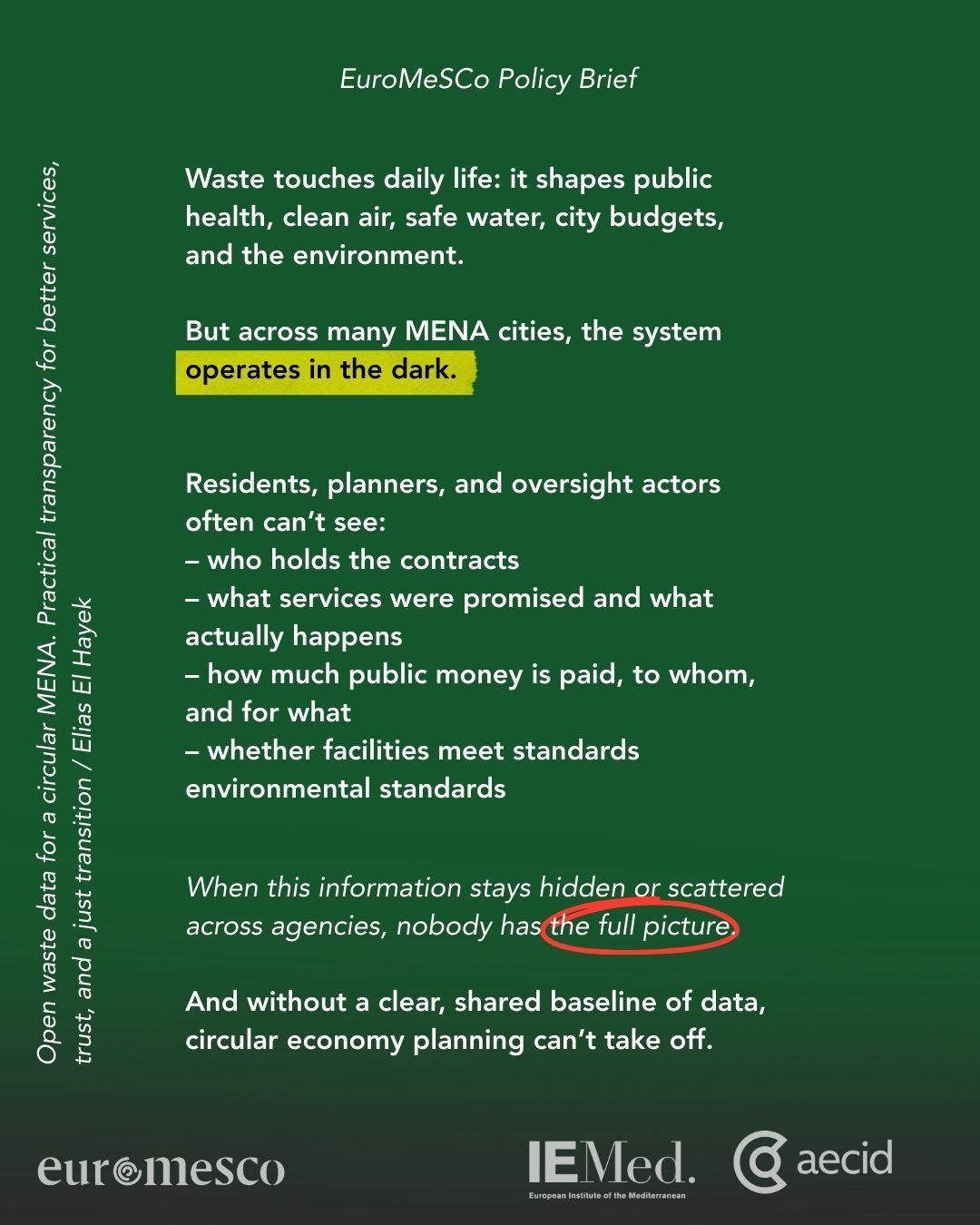
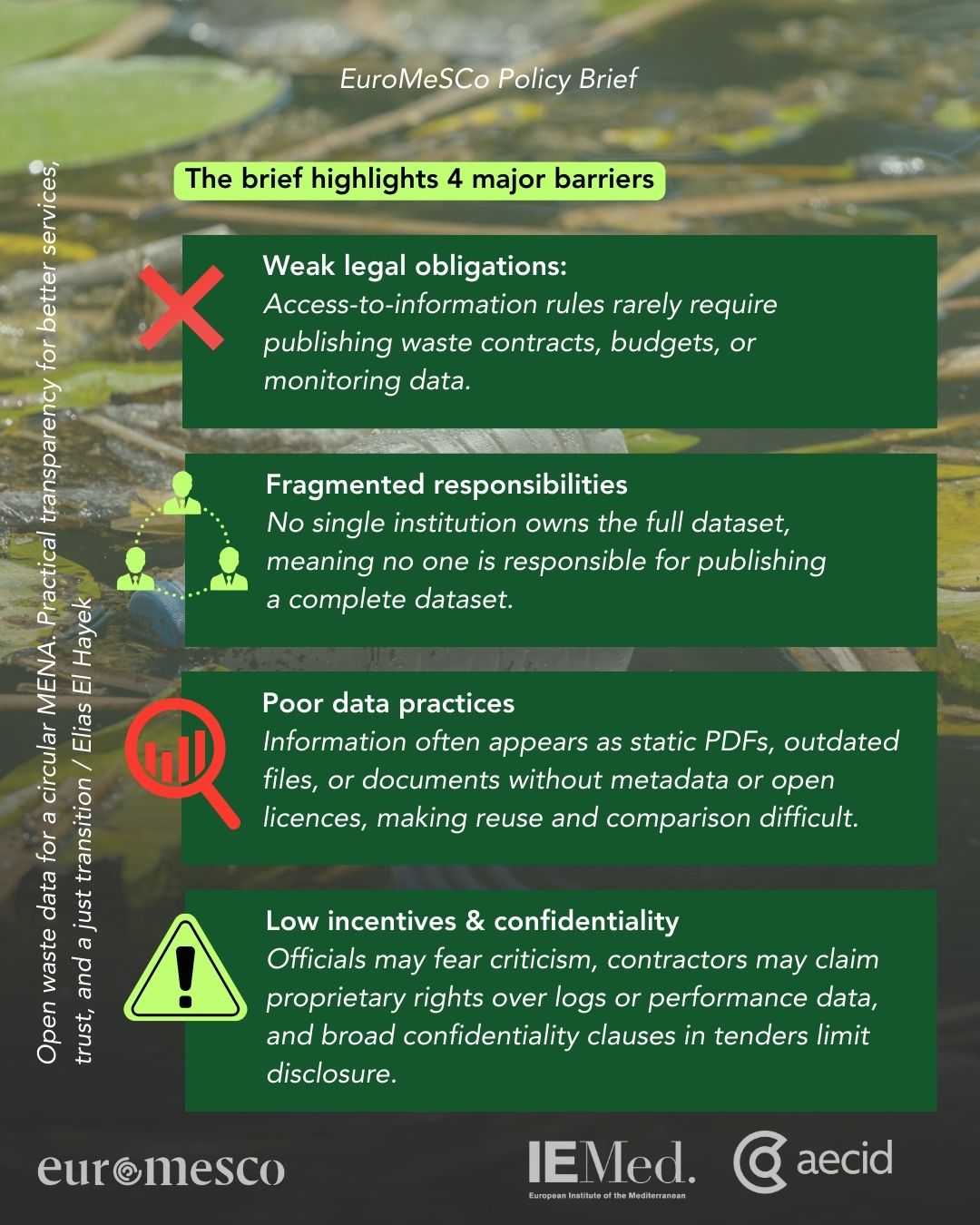
The analysis shows that limited transparency undermines value for money, hides missed collections or cost overruns, and prevents planners from identifying hotspots or verifying recycling and recovery claims. Fragmented responsibilities, restrictive legal frameworks, broad confidentiality clauses, and weak open-data practices further widen the governance gap. As a result, residents, oversight bodies, and civic actors often lack even basic information on tonnage flows, landfill emissions, contractor obligations, or monthly performance trends.
To address this, the Brief proposes the Open Waste Data Index (OWDI) — a simple 0–2 scoring tool that defines a minimum, city-level dataset across six pillars: contracts and projects, budgets and payments, service performance, environmental monitoring, citizen complaints, and data usability. Designed to be low-cost and compatible with municipal workflows, OWDI offers a practical pathway for cities, regulators, donors, and civil society to publish, verify, and reuse information on a predictable schedule.
The Brief calls for a practical, rights-based and service-centred approach to transparency in the waste sector, ensuring that accountability and public access to information move in step with investment and circular-economy ambitions.
It recommends:
• Grounding waste-sector transparency in clear legal obligations and proactive disclosure rules
• Embedding open-data requirements into municipal waste contracts and performance monitoring
• Providing national platforms to aggregate city-level waste data and ensure comparability
• Requiring machine-readable formats, open licences, and predictable update calendars
• Linking donor and development funding to verifiable transparency milestones
• Mobilising youth, civil society, and civic tech teams to reuse existing data and strengthen public oversight