
Jean-Loup Samaan
Senior Research Fellow, Middle East Institute of Singapore

Máté Szalai
Research Fellow at the Conflict Research Unit of Clingendael, and Associate Professor, Corvinus University of Budapest

Gianmarco Gabriele Marchionna
Research Fellow LUISS University - Center for International and Strategic Studies (CISS)

Elaine Donderer
Consultant with the Arava Institute of Environmental Studies
Abstract
Europe’s maritime security is being reshaped across three interconnected theatres — the Mediterranean, the Red Sea and the Persian Gulf — by overlapping crises that no single naval force can address alone.
This Joint Policy Study brings together four perspectives to examine that shift.
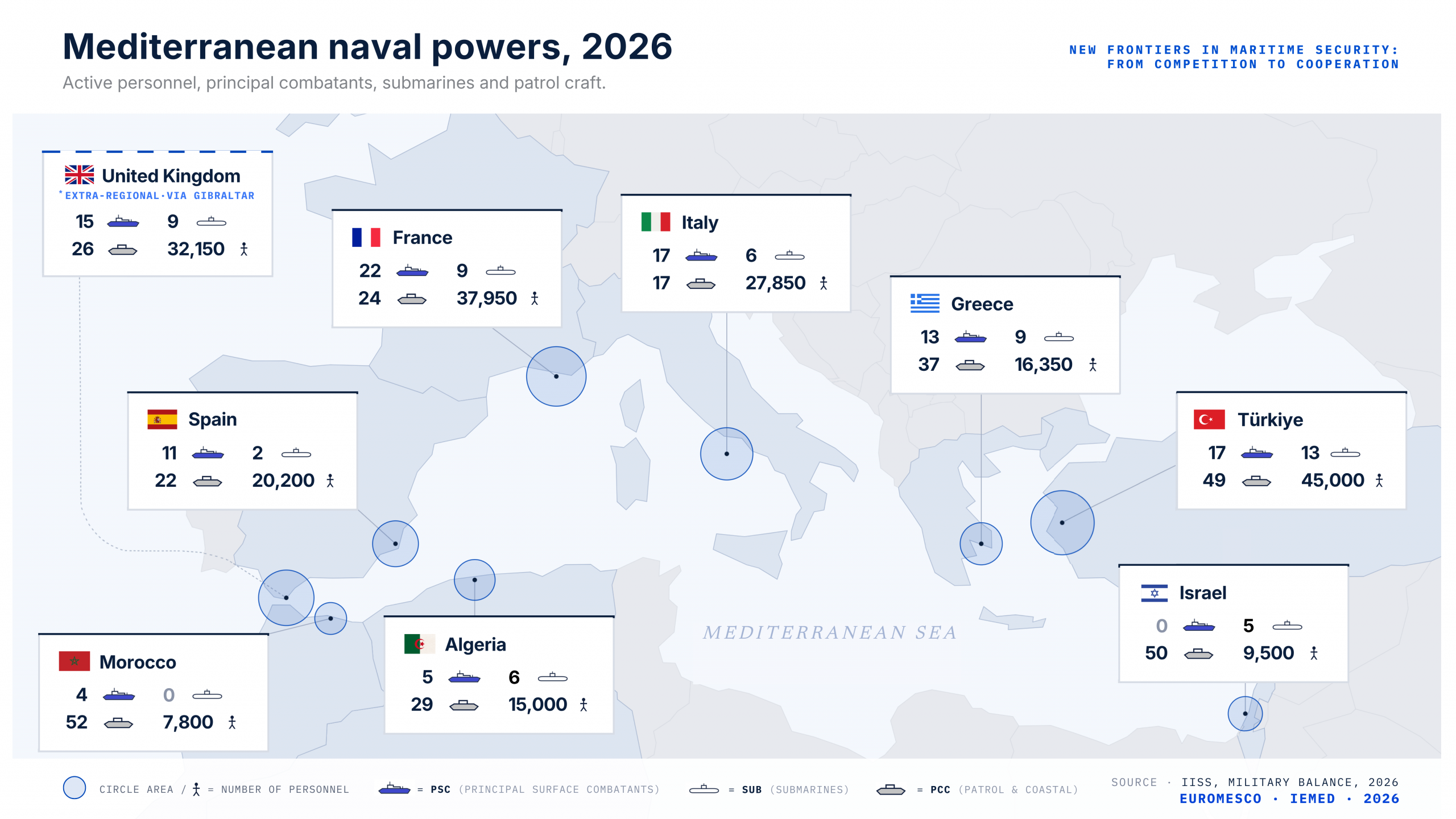
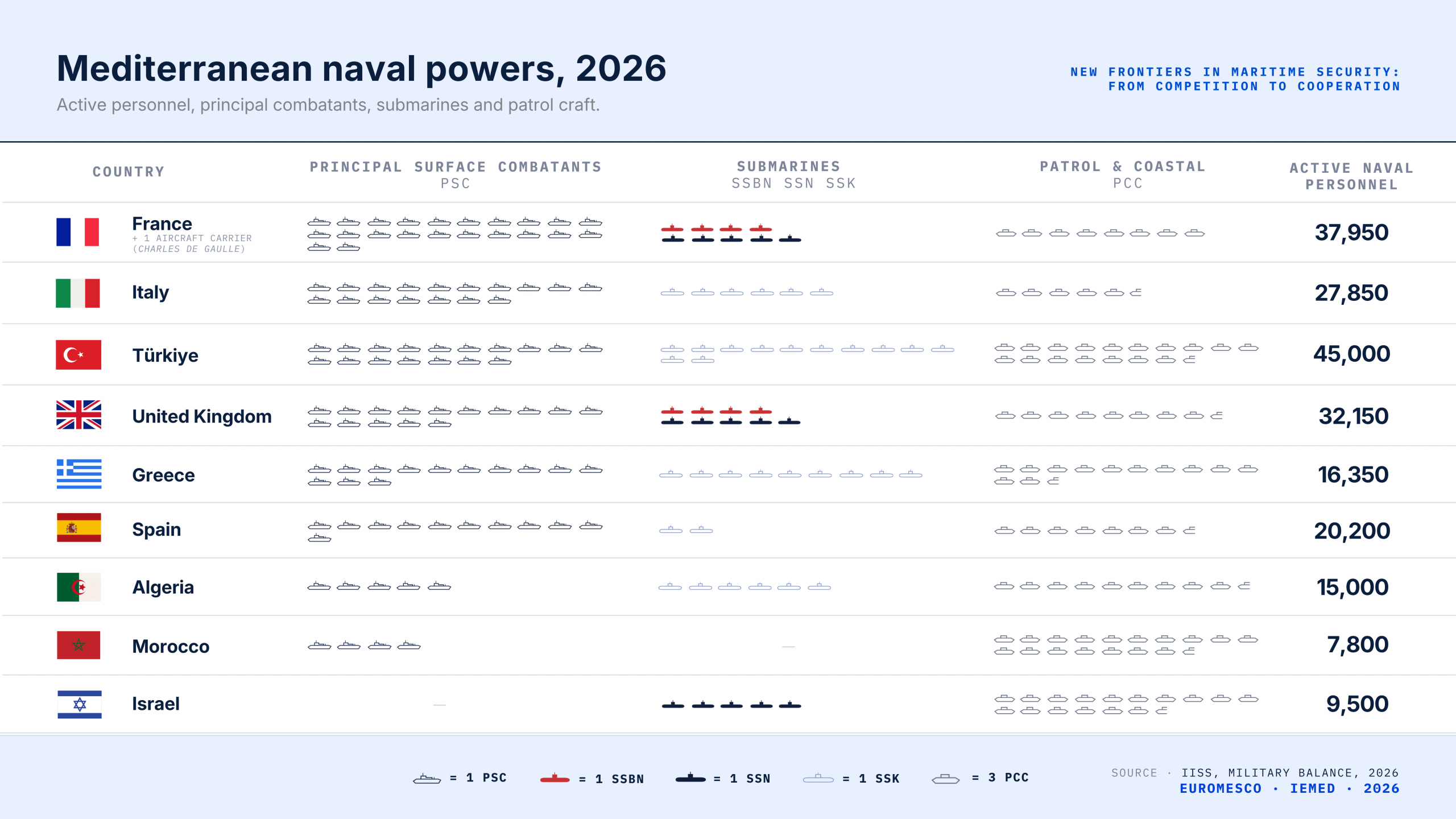
- The first chapter assesses Europe’s declining naval capabilities against a fragmented southern flank shaped by fragile states, piracy and interstate rivalries, arguing that regional cooperation is a more realistic path than national rearmament alone.
- The second examines how the growing Saudi-Emirati rivalry, compounded by the 2026 US–Israel–Iran war, is reshaping Gulf dynamics with direct consequences for European trade and energy security.
- The third turns to the Mediterranean’s submarine cables, using the 2024 MV Rubymar incident to show how fragmented governance — not just physical vulnerability — is Europe’s greatest infrastructure risk.
- The final chapter proposes the Blue Data Bridge, a federated AI architecture that enables regional actors to share maritime intelligence without exchanging sensitive raw data.
Together, the chapters argue that lasting maritime security depends less on expanding naval power than on deeper cooperation, shared information and institutional trust.