Policy Brief
Can the New Pact for the Mediterranean Advance Sustainable and Inclusive Regional Cooperation?

Abstract
Amid growing geopolitical tensions, protectionism, and declining development finance, the Euro-Mediterranean partnership faces mounting challenges. At the same time, the Southern Mediterranean remains strategically vital for Europe’s trade, supply chains, and decarbonisation ambitions, while partner countries must address structural constraints such as unemployment, limited diversification, and climate vulnerability.
Against this backdrop, this policy brief examines whether the EU’s New Pact for the Mediterranean (launched 28 November 2025) can deliver a more effective, balanced, and forward-looking framework for regional cooperation.
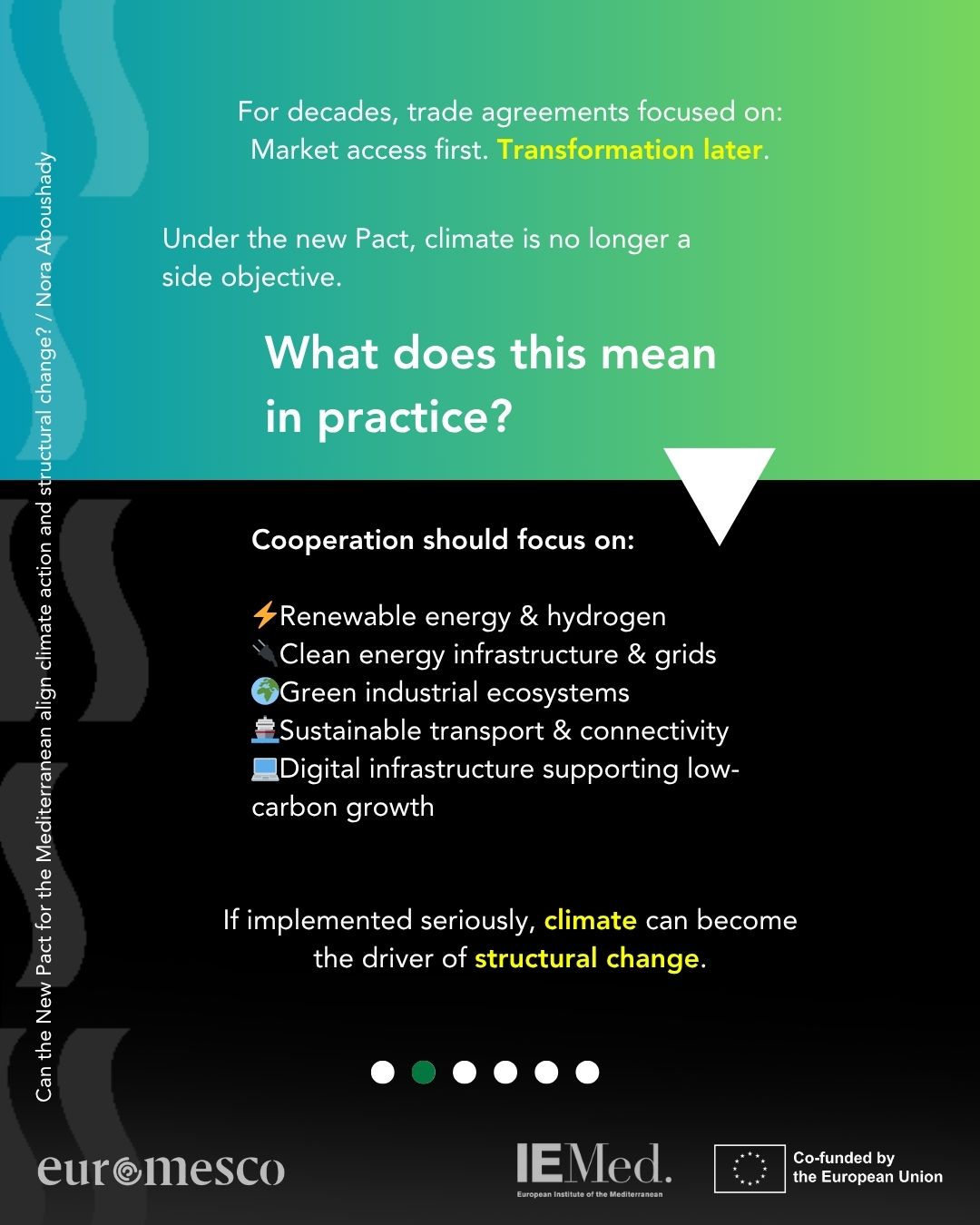
Focusing on Pillar II of the Pact—economic integration and sustainable growth—the brief explores how the EU aims to reconcile its priorities (decarbonisation, supply chain resilience, and competitiveness) with the development needs of Southern Mediterranean partners. It reviews four key areas of cooperation: deepening economic integration, fostering inclusive growth, developing clean energy value chains, and strengthening digital infrastructure.
The analysis highlights both opportunities and constraints. While the Pact promotes investment mobilisation through initiatives such as the Global Gateway, startup support via StartUp4Med, and sectoral cooperation in energy and digitalisation, its success will depend heavily on political will, regulatory convergence, and the ability to overcome long-standing structural barriers. Past initiatives in trade integration, SME support, and energy cooperation have shown limited transformative impact, raising questions about implementation capacity and incentives.
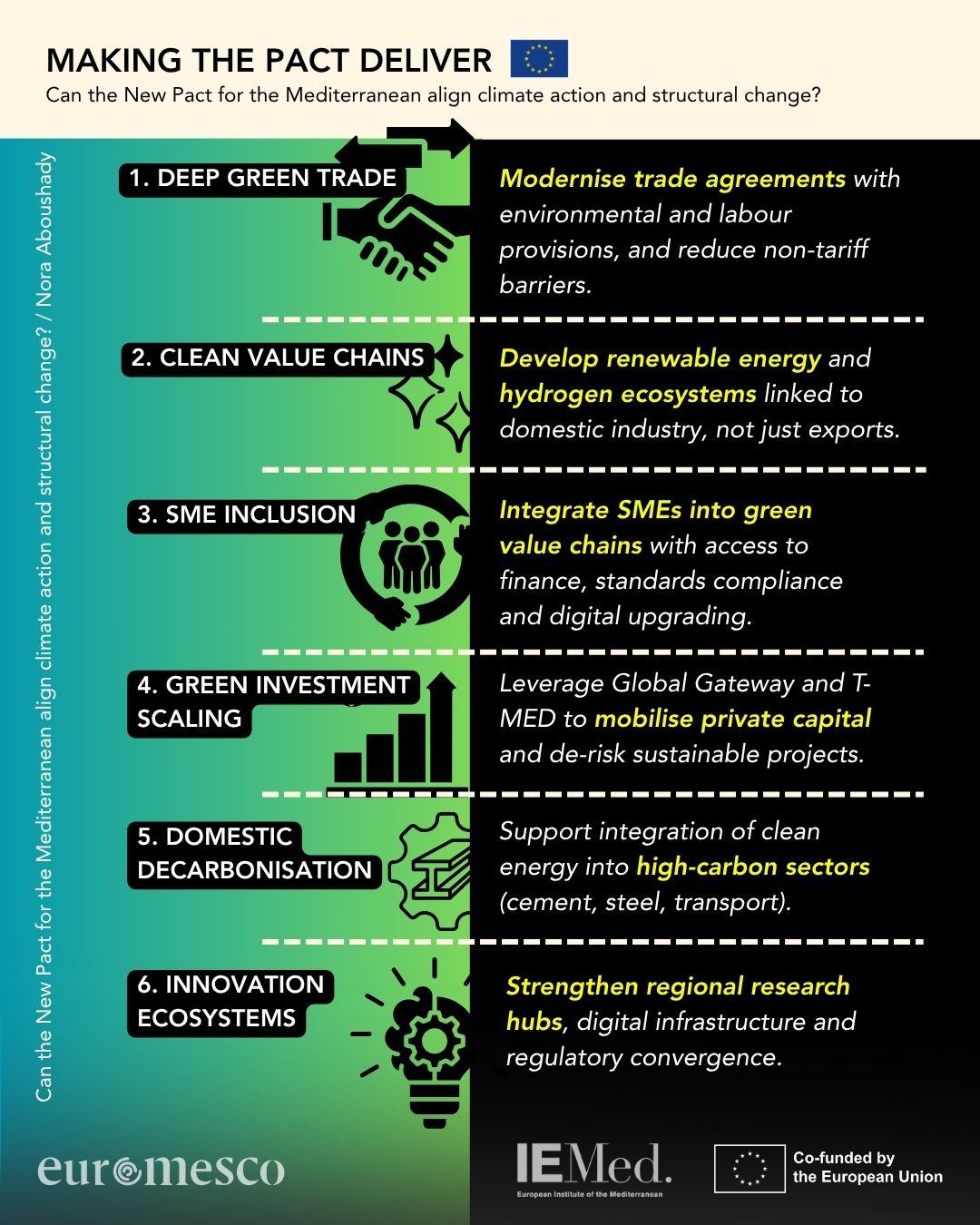
The brief concludes with actionable recommendations to ensure the Pact delivers tangible outcomes, including strengthening incentives-based partnerships, promoting inclusive growth and decent work, mobilising blended finance, advancing selective trade liberalisation (particularly in agriculture), supporting green and digital transitions, and improving coordination across policy areas such as skills, migration, and services.